Flagship offering
IICRC Commercial Drying Specialist training
Five days. 32 hours. Built on the ANSI/IICRC S500 standard, taught by an owner-operator who designs and runs commercial drying equipment.
Cohort forming now — dates to be announced. Instructor approval in process.
- Duration
- 5 days
- Instruction
- 32 hours
- Prerequisite
- IICRC WRT
- Exam fee
- $65 to IICRC
Status: instructor approval in process
Parker Olsen has applied for IICRC Approved Instructor status in Commercial Drying Specialist and approval is pending. Until it is granted, no CDS class can be scheduled and Catalyst Training makes no claim to be an approved or accredited school. The waitlist is how you find out first — it costs nothing and commits you to nothing. Consulting is unaffected and available today.
The certification
What CDS certifies
The Commercial Drying Specialist certification demonstrates expertise in damage inspection and evaluation, workflow management, process administration, and the technical methods of effective and timely drying.
It applies to commercial, industrial, institutional and complex residential water-damaged structures, systems and FFE — furniture, fixtures and equipment. The IICRC describes it as intended for the experienced technician, project manager, estimator, or owner/manager.
- Course length
- 5 days — 32 hours of instruction, plus exam and break time
- Prerequisite
- IICRC WRT certification required. OSHA-10 and HST strongly advised
- Exam
- IICRC exam on the final day. $65 fee paid directly to the IICRC before the certificate issues
- Curriculum
- Drawn from the ANSI/IICRC S500 standard
- Certifying body
- IICRC. Catalyst Training is not an accredited institution and does not issue the credential
- Tuition
- Not yet set. Published with the first cohort dates
- Location
- To be announced. Catalyst Training serves clients nationwide
Curriculum · ANSI/IICRC S500
Nineteen topic areas
The CDS body of knowledge is drawn from the S500 standard. These are the subject areas the certification covers.
- 01Principles of drying
- 02Differences between residential and commercial structures
- 03Project management
- 04HVAC systems, components and mechanics
- 05Documentation and analysis
- 06Negotiation and communication
- 07Health and safety
- 08Hazard control
- 09Engineering controls
- 10Planning, staging and project setup
- 11Calculations, energy and sizing
- 12Equipment options
- 13Climate control
- 14Airflow and control
- 15Temporary power generation and distribution
- 16Advanced psychrometry and moisture mechanics
- 17Commercial construction practices
- 18Drying complex structures, systems and materials
- 19Case scenarios
Source: IICRC CDS certification page and published CDS course listings — iicrc.org/cds, published CDS course listing.
Who should attend
Built for operators, not spectators
- Residential operators moving into commercial. You can run a house loss in your sleep and want the same confidence on a facility.
- Experienced technicians who already hold WRT and want the commercial framework.
- Project managers and estimators who have to defend a scope, a timeline and an equipment count.
- Owners and managers deciding whether to buy, rent or subcontract commercial capability.
What to expect
Equipment on the floor, math on the board
- 01
Psychrometrics you can actually apply
Grain depression, vapour pressure and energy balance worked against real jobsite conditions rather than ideal ones.
- 02
Sizing, not guessing
CFM and airflow calculation, dehumidification capacity, climate control and equipment options for large volumes.
- 03
Power as a first-class constraint
Temporary power generation and distribution — what the building can give you and what you have to bring.
- 04
Documentation that survives review
Documentation and analysis, negotiation and communication, and the case scenarios that tie it together.
Waitlist
Be first to get cohort dates
There is nothing to buy here yet, and that is deliberate. Instructor approval is pending, so there is no date, no location and no tuition to publish. What there is, is a list.
Everyone on it hears first — dates, location, tuition and prerequisite lead time — before anything goes public.
- Cost to join
- None
- Commitment
- None — the waitlist is not a registration
- Need help sooner?
- Consulting is available today
Join the CDS waitlist
Cohort dates are not set yet. Add your details and you'll be in the first group contacted when scheduling opens — no payment, no obligation.
FAQ
Before you ask
Is Catalyst Training an IICRC Approved School?
No. Catalyst Training is an independent training and consulting business. Parker Olsen has applied for IICRC Approved Instructor status in CDS and that application is pending. No CDS class will be scheduled or advertised with dates until approval is granted.
What happens if I join the waitlist?
You get an email when cohort dates, location and tuition are set — before anything is published. There is no payment, no deposit and no obligation, and you can ask to be removed at any time.
I don't have WRT yet. Should I still sign up for the waitlist?
Yes. WRT is a prerequisite for CDS, so you'll want it in place before the class runs. Tell us your status on the form and you'll get planning lead time.
How is the $65 exam fee handled?
The IICRC exam fee is $65 and is paid directly to the IICRC on the final day of class, before the certificate issues. It is separate from any tuition Catalyst Training sets.
Will the class include hands-on equipment?
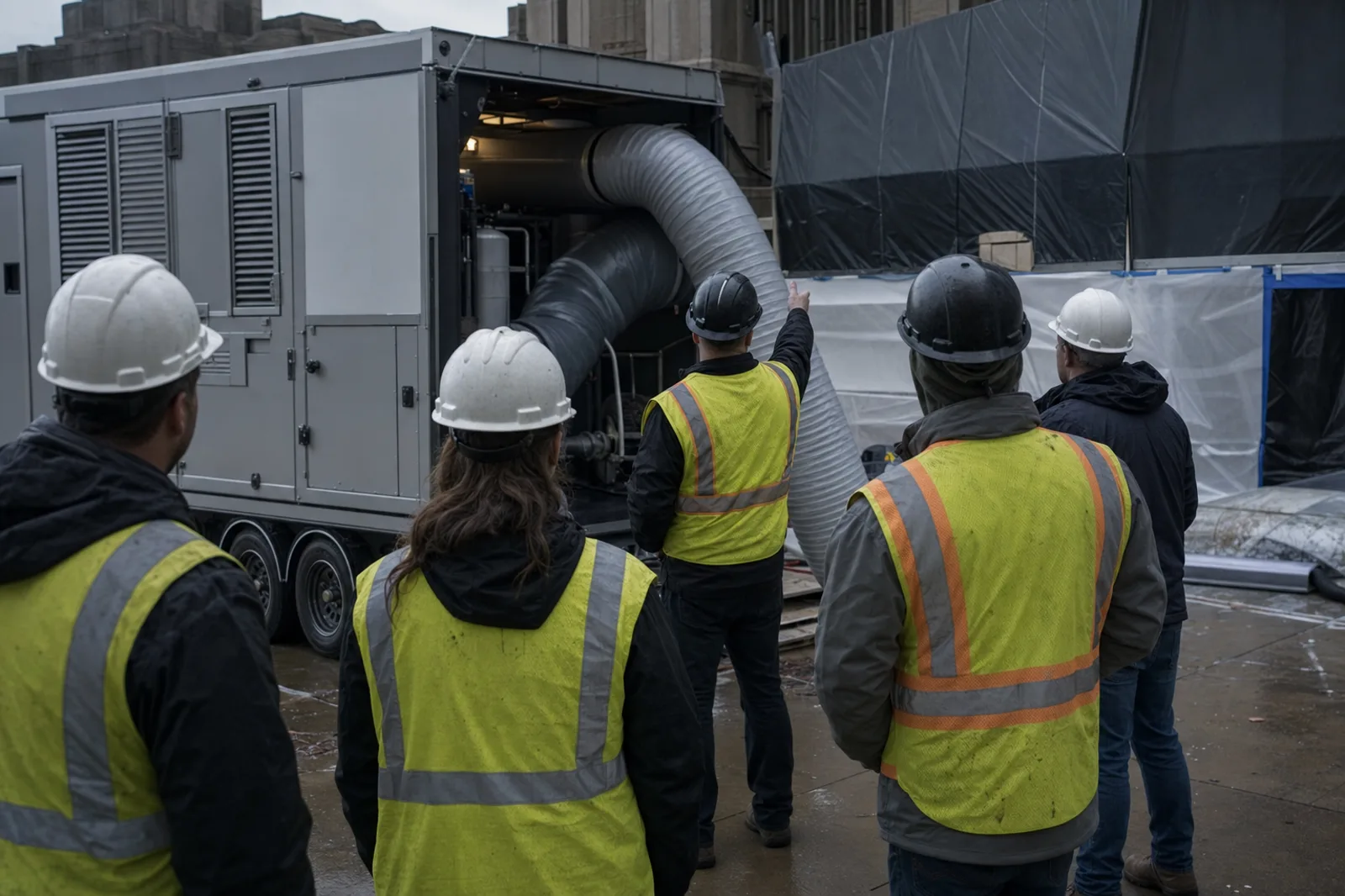
That is the intent. Parker owns a Dri-Max 6005 diesel-fired desiccant trailer used as a teaching aid for adsorption, reactivation, process and reactivation airflow, wet-exhaust routing and grain depression, along with custom desiccant and power equipment he built himself.